
How to Use a Piano Foot Pedal Properly
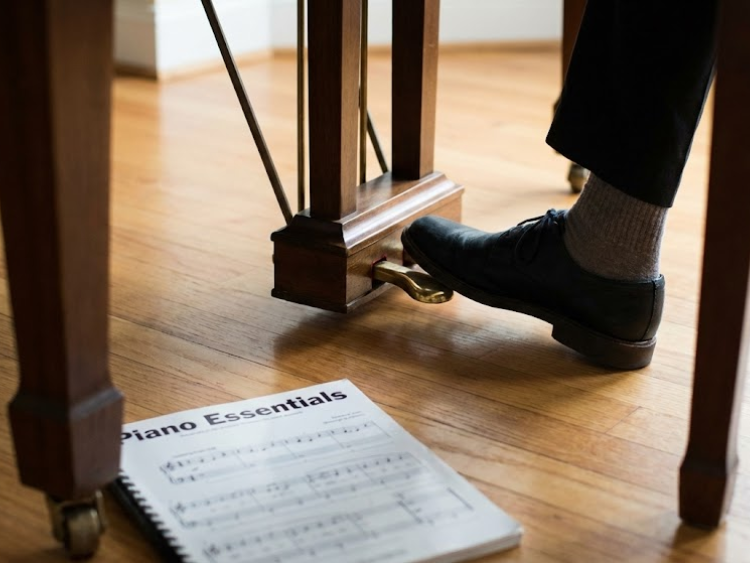
With the help of the foot pedal, the expressive performance of the piano is a must. No matter what you are playing, be it a classical composition, pop ballad or movie soundtrack, correct pedaling to make all the notes more emotive and tender. Most novices only practice with their hands when they learn how to play the pedals, but they can open the door to a new musical universe.
Understanding the Main Piano Pedals
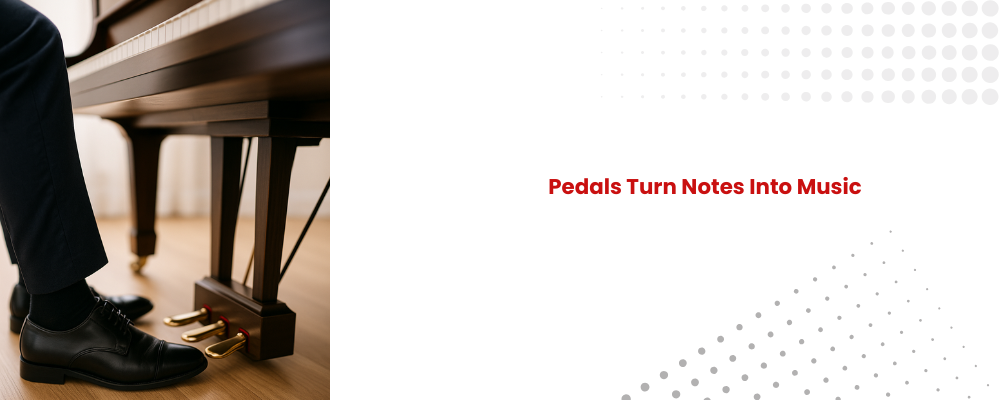
The tone, volume, and expression of playing are significantly influenced by the piano pedals, which is why the development of the professional playing technique partly relies on the mentioned elements.
Sustain Pedal (Right Pedal): The sustain pedal causes the notes to sound dominant when the keys are released, which contributes to the richer, connected sound that supports the rich melodies and harmonies.
Soft Pedal (Left Pedal / Una Corda): This is a volume-minimizing and warm soft-sounding pedal, wherein dynamic control is possible by the pianist in both the emotional and silent moments of the music.
Sostenuto Pedal (Middle Pedal): This holds only some of the notes but leaves others unsullied, which creates complex music-making harmonies and moving lines distinct.
The learning of these pedals will enhance the expression, tone manipulation, and sound quality of the performance of the pianists at all levels.
Basic Technique: How to Use the Sustain Pedal Correctly
The sustain pedal is one of the most expressive tools on a piano. When used properly, it helps notes blend smoothly and adds richness to your playing. However, overusing it can make the music sound messy or unclear. That’s why learning the correct technique is essential right from the beginning.
Before we explore the key tips below, remember: the pedal should enhance the music—not hide mistakes.
Pointers to Use the Sustain Pedal Effectively:
Keep your heel on the floor and move only the front of your foot.
Press the pedal gently, not too fast or too deep.
Release the pedal when chords change to avoid “muddy” sound.
Listen carefully—your ears guide how long to hold the pedal.
Practice pedaling slowly with scales and simple songs.
Use half-pedaling for softer passages (as you progress).
Always coordinate hands and foot together while switching chords.
The more you practice, the more confident and expressive your piano playing will become.
Avoid the Most Common Beginner Mistake: Over-Pedaling
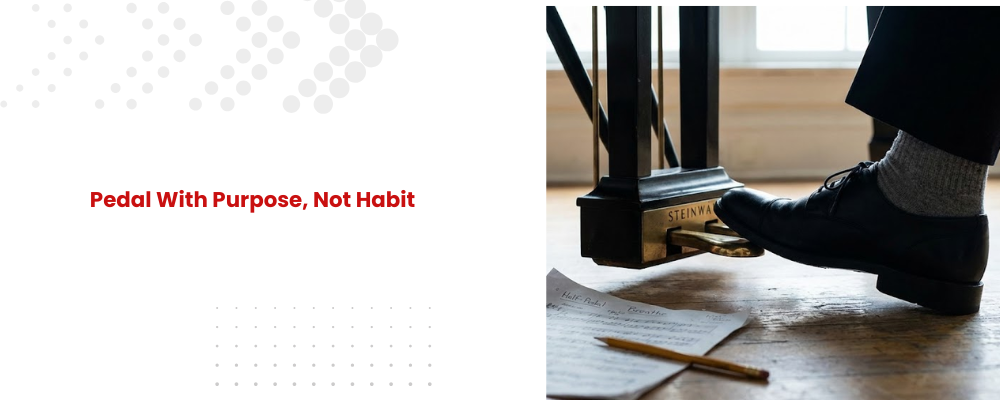
Holding the pedal down for too long can turn beautiful tones into a muddy blur. Listen carefully and lift the pedal whenever harmonies change dramatically. Good pedaling should help notes blend — not drown each other.
If you’re unsure, slow practice with little to no sustain helps you hear where pedal is truly needed.
Pedaling for Expression
Once you’re comfortable with the basics, you can use the pedal to shape emotion in music:
Short, quick pedal taps for staccato passages with sparkle
Half-pedaling to soften ringing notes subtly
Rhythmic pedaling to emphasize beats or phrases
Pedal “breaths” to imitate singing phrasing
Great pianists don’t pedal constantly — they pedal intentionally.
How Digital Piano Players Benefit From Pedal Practice
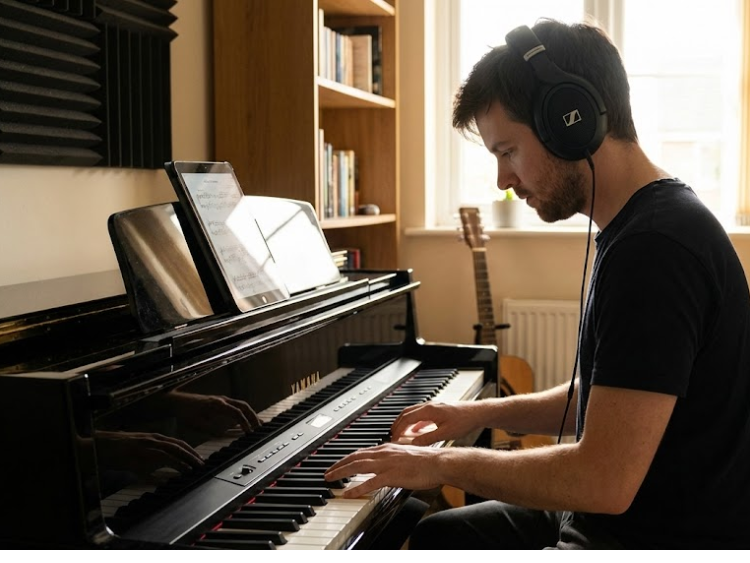
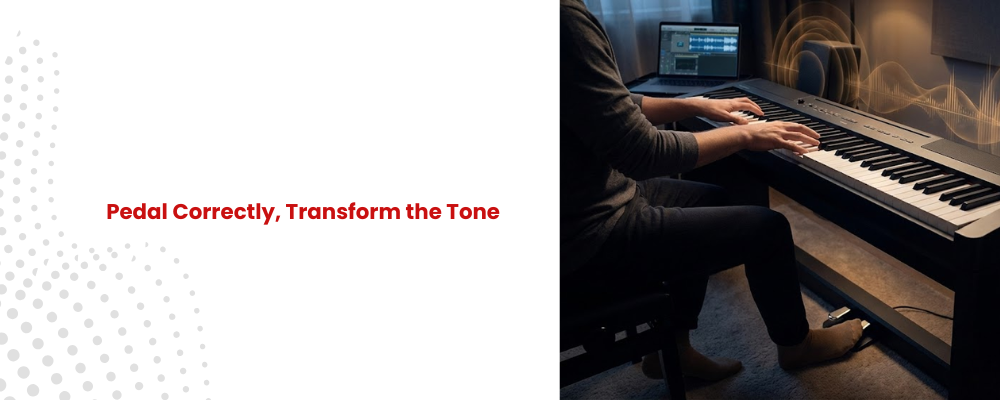
For digital piano players, mastering the sustain pedal is the key to unlocking the instrument's full sonic potential. Unlike acoustic pianos, where resonance occurs physically, modern digital pianos use advanced "damper resonance modeling" to simulate string vibrations. Proper pedal technique is the only way to activate these algorithms and transform a flat digital tone into a rich, immersive soundscape.
The Three Key Benefits
Seamless Legato: It allows you to connect chords and distant notes smoothly where your fingers physically cannot stretch, creating a fluid performance.
Tone Enrichment: Engaging the pedal triggers the digital sound engine to add harmonic depth, making the sample sound "larger" and more realistic.
Dynamic Control: Learning "half-pedaling" (on supported portable or console models) teaches you to control the decay of the sound, preventing the "muddy" audio often caused by holding the pedal down fully for too long.
According to Yamaha, the world's leading piano manufacturer, understanding these mechanics is essential because "pedaling is the soul of the piano." Without it, digital players miss out on the expressive capabilities engineered into their instruments.
Conclusion
Using a piano pedal correctly is all about control, timing, and listening. When mastered, pedaling transforms simple notes into a richer, connected, and more emotional performance. Start slowly, refine your ear, and let the pedal become a natural part of your musical expression.
Need a reliable piano pedal or practice accessories? Explore high-quality options designed for smooth control at Piano Shop Store. Upgrade your technique — and your sound — with the right pedal beneath your feet. Let the music flow beautifully, one pedal press at a time.
Recent Posts