
Digital vs Acoustic Piano Accessories: What’s Different?
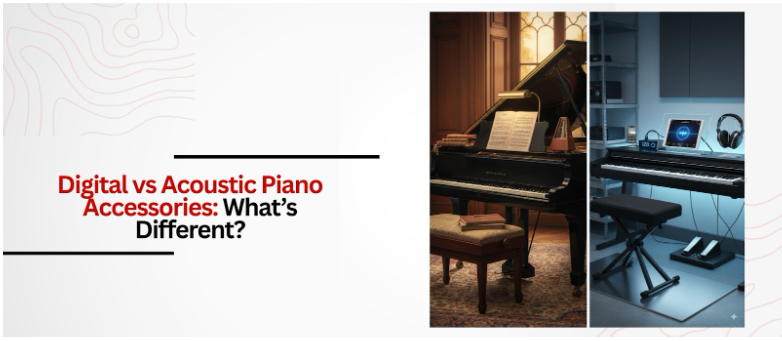
Imagine enhancing your musical brilliance with the right tools—whether at home or on the concert stage. The right accessories not only improve comfort but also safeguard your instrument while boosting overall performance. With more musicians seeking tailored setups, accessories are no longer seen as add-ons but as essentials that define the playing experience.
In 2024, about 68% of pianists reported that customized accessories improved their sessions, with 55% favoring persistence-free setups like digital gear, according to Statista. Understanding the unique needs of digital piano accessories compared to acoustic piano gear can help transform playing comfort, instrument care, and sonic quality. In this blog, we’ll explore the differences and why they matter for every pianist.
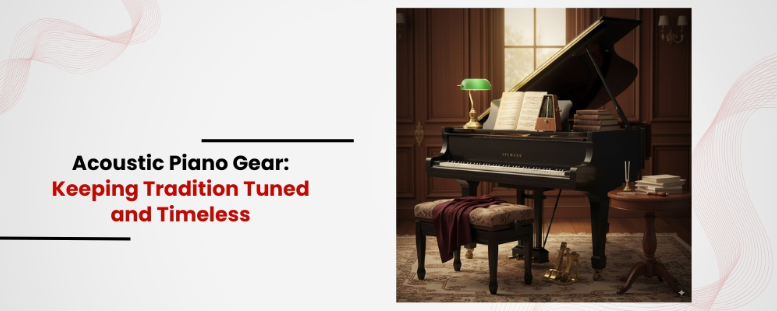
Acoustic Piano Gear: Keeping Tradition Tuned and Timeless
Humidifiers and Temperature Monitors:
Acoustic pianos are sensitive to humidity; fluctuations can cause wood to warp and tuning to falter. A hygrometer and humidifier are vital, especially in climates with broad seasonal shifts as per Piano Buyer.
Piano Tuning Tools:
Acoustic pianos require periodic professional tuning. Simple tools like tuning mutes or pitch pipes assist technicians in achieving a stable, balanced sound.
Key and Soundboard Care:
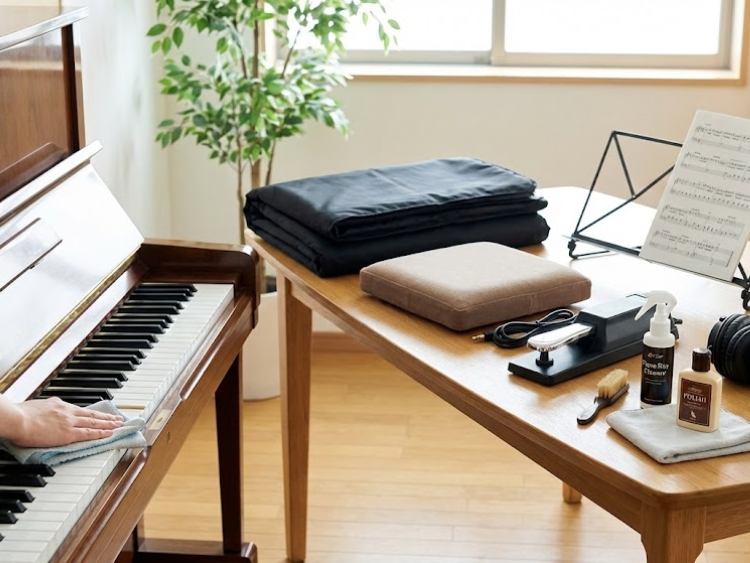
Felt key cleaners and soundboard brushes help preserve the acoustic piano’s natural resonance. Keeping dust at bay ensures tonal clarity and action responsiveness.
Digital Piano Accessories: Enhancing Function and Flexibility
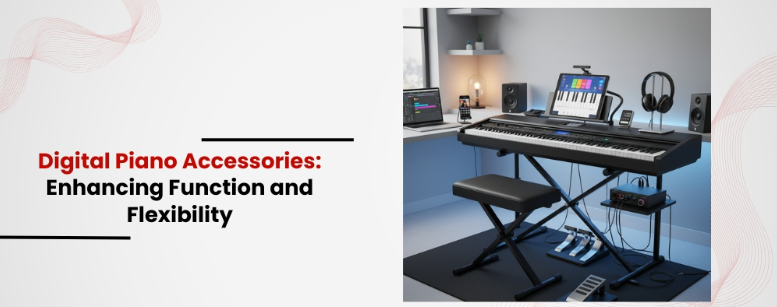
Pedal Units and Expression Devices:
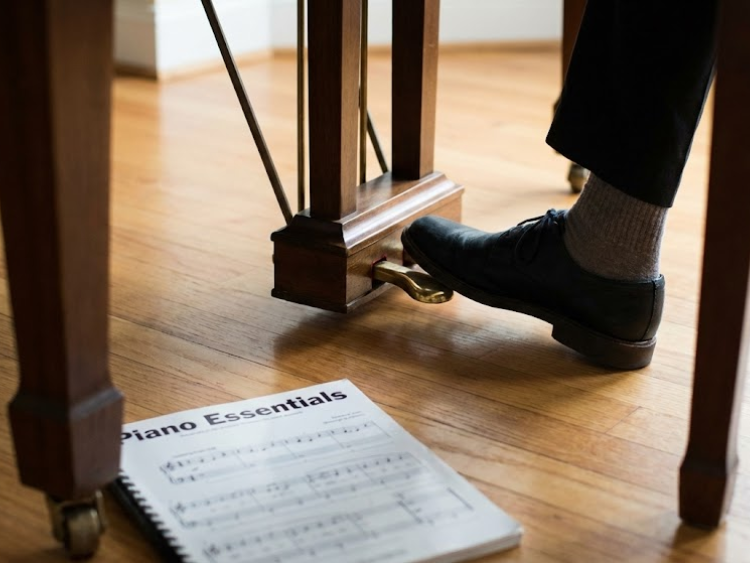
Digital pianos often use specialized foot pedals or USB-connected expression pedals to mimic sustain and volume control. These accessories extend playability for complex pieces or dynamic touch.
Headphones and Audio Interfaces:
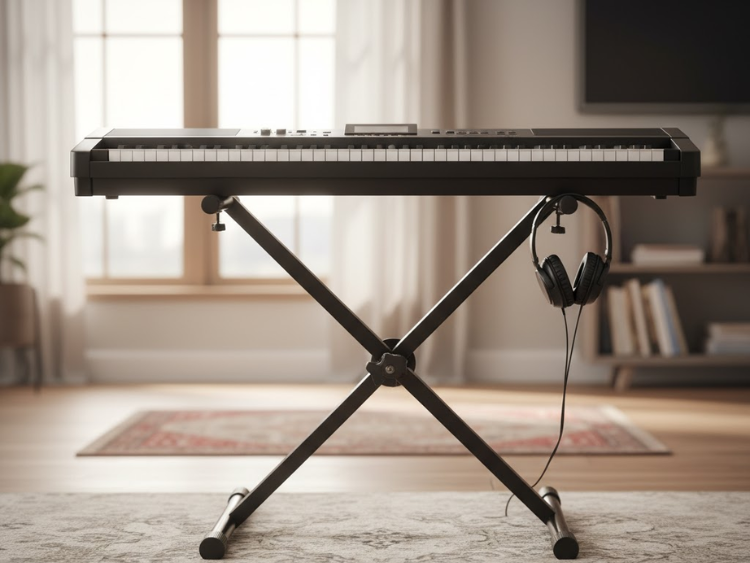
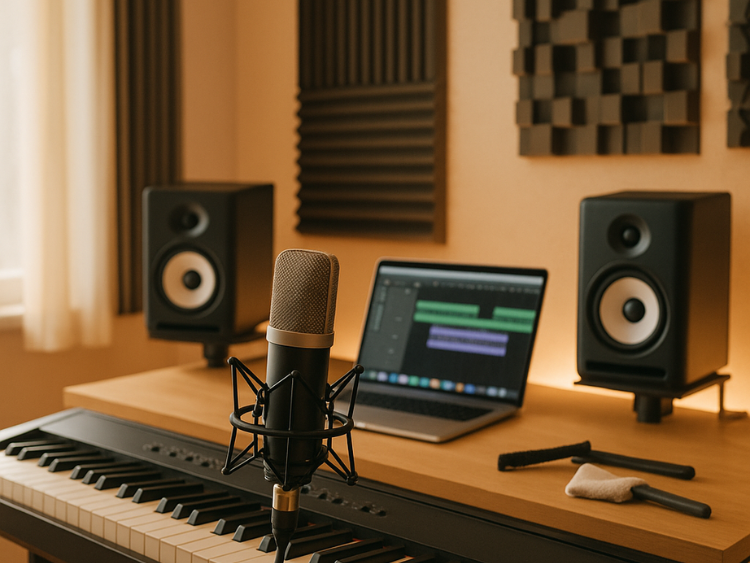
Silent practice is enabled by quality headphones, while audio interfaces allow recording directly into DAWs—ideal for composing or music production according to Wikipedia: Digital Piano.
Stands and Dust Covers:
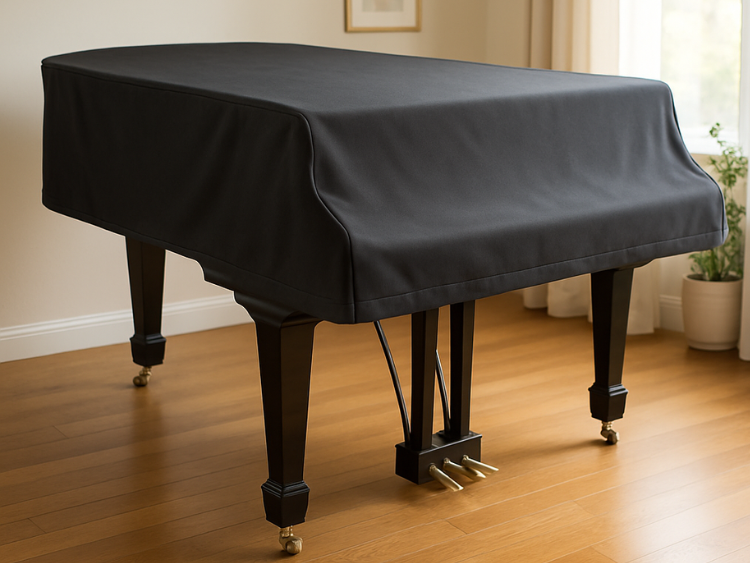
Many digital pianists invest in portable, collapsible stands and fitted dust covers to protect keys and electronics in shared or variable environments.
Accessory Crossover: Where Digital Meets Acoustic
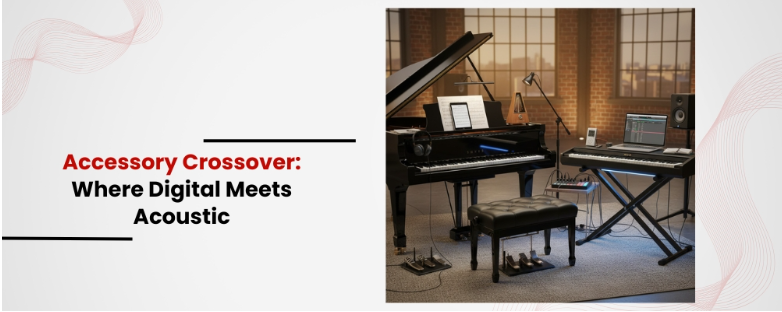
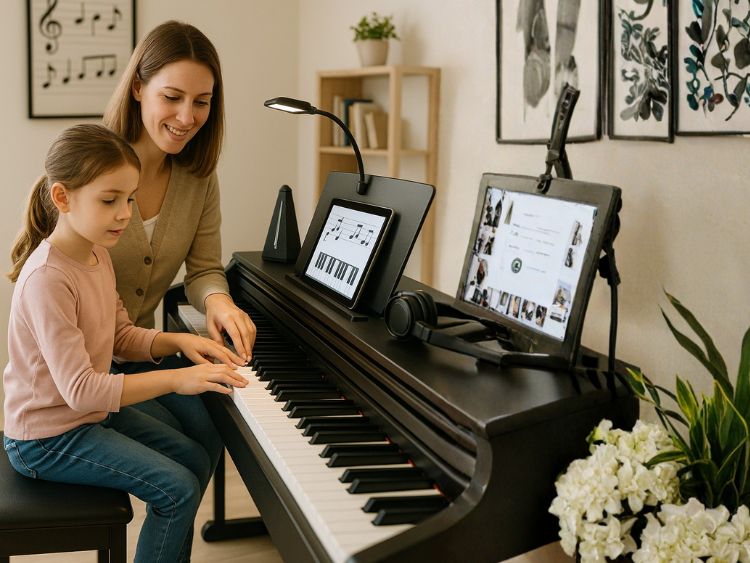
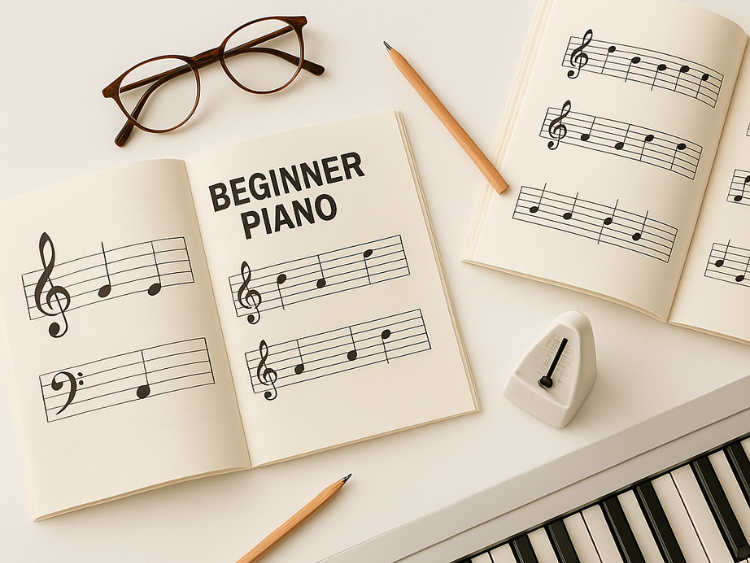
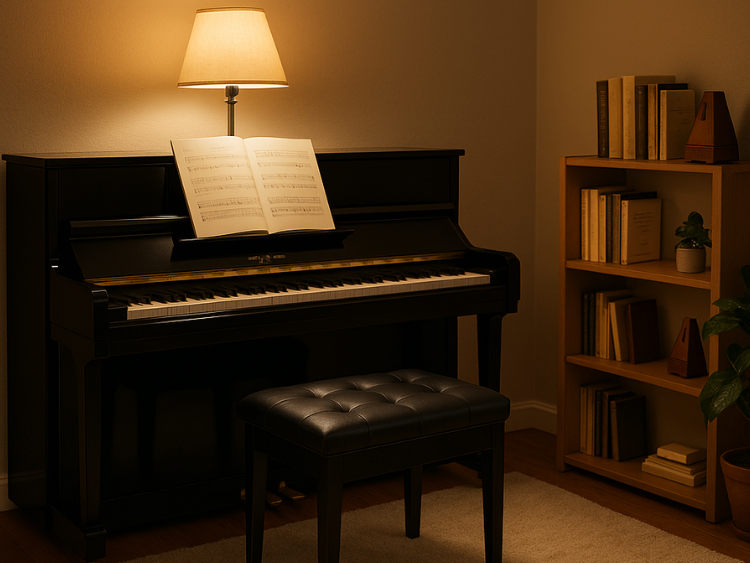
Some accessories benefit both setups, like metronome apps, bookshelves, or piano benches—they enhance posture, practice structure, and comfort irrespective of piano type. However, crossover tools like key cleaners suit acoustic instruments best, whereas USB MIDI cables are meaningless for acoustic models.
Which Accessories Match Your Piano?
An accessory kit often reflects the instrument’s requirements:
For acoustic pianos, focus on climate control (humidifiers), maintenance (tuners and brushes), and protective coverings.
For digital pianos, prioritize tech-enhanced tools (pedals, interfaces) and convenience (covers, stands).
Universal essentials like benches and metronomes remain invaluable to all pianists.
Conclusion
Both digital and acoustic pianos benefit from thoughtfully chosen accessories, yet their needs differ significantly. While acoustic instruments thrive with maintenance and climate-focused gear, digital models shine with tech-based tools that streamline practice and creativity.From cleanliness and tuning to connectivity and control, the right accessory selection can elevate musicianship and instrument care. Choose accessories that align with your instrument type, and performance quality and enjoyment will follow.
Recent Posts